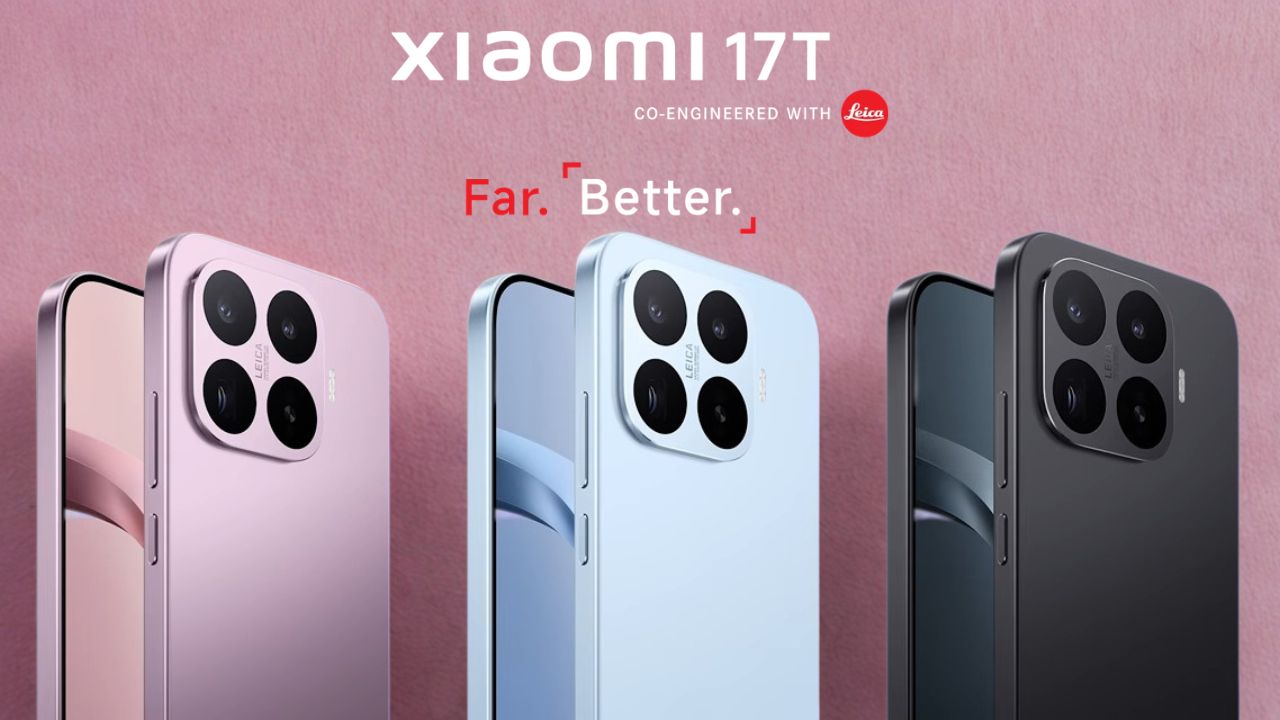
Xiaomi 17T Review : The Xiaomi 17T has officially entered the Indian market, bringing flagship-style features to the upper mid-range smartphone segment. After several years without a T-series launch in India, Xiaomi has decided to bring back the lineup with a device that focuses on display quality, performance, battery life, and camera improvements.
After launching in China and Europe where it raised eyebrows with a steep price tag of €700–€750 (approx. ₹80,000–₹85,000) Xiaomi has brought the device to India at a highly disruptive effective price starting around ₹55,000 for the 12GB RAM and 256GB storage variant.
Does this premium device deliver on its promises, or do the plastic construction and regional adjustments hold it back? Here is our comprehensive, deeply researched review of the Xiaomi 17T.
Contents
- 1 Xiaomi 17T Design and Build Quality
- 2 Xiaomi 17T Display
- 3 Xiaomi 17T Performance MediaTek Dimensity 8500 Ultra
- 4 Software: HyperOS 3.0 and Deep Gemini Integration
- 5 Xiaomi 17T Performance Leica Partnership Evolves
- 6 Xiaomi 17T Battery Life and Charging
- 7 Connectivity and Hardware Essentials
- 8 Verdict: Should You Buy the Xiaomi 17T?
Xiaomi 17T Design and Build Quality
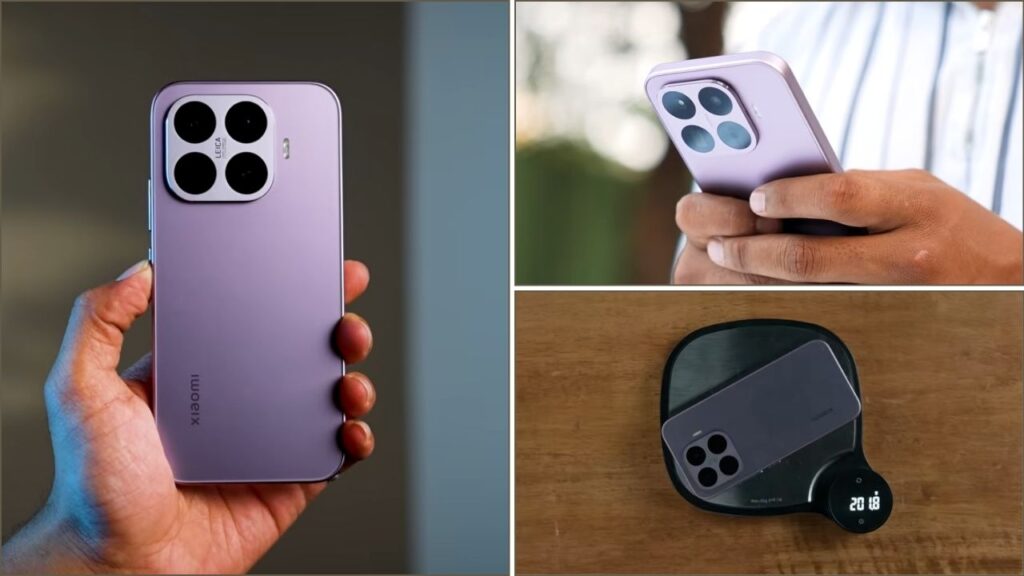
Xiaomi has adopted a strictly minimalistic design language for the 17T. Available in Violet, Blue, and Black, the Violet variant offers a clean, understated aesthetic.
| Design Element | Specification / Material |
|---|---|
| Back Panel Material | High-gloss Polycarbonate (Glass-like Finish) |
| Frame Material | Reinforced Plastic Frame |
| Front Protection | Corning Gorilla Glass 7i |
| Weight | 201.8 grams |
| Water & Dust Resistance | IP68 Certified |
| Color Options | Violet, Blue, Black |
Ergonomics and Hand Feel
Despite what initial impressions might suggest, the rear panel and the frame are constructed from high-grade plastic rather than glass and aluminum. While it mimics the sheen of glass exceptionally well, the tactile feel lacks the cold, premium touch of metal.
On the scale, the device weighs 201.8 grams. Despite crossing the 200g threshold, the phone feels remarkably compact and well-balanced. Its narrow form factor ensures that it fits comfortably in average-sized hands, avoiding the bulky feel of modern ultra-flagships.
Durability and Port Selection
The front display is protected by Corning Gorilla Glass 7i. In real-world drop tests from pocket height onto both the front and back panels, the chassis absorbed impact without structural deformation or visible denting, proving its structural rigidity.
- Right Side: Power button and volume rockers placed at an ideal, easily reachable height.
- Left Side: Clean, completely flush frame.
- Bottom: Speaker grille, USB Type-C port (USB 2.0 standard), primary microphone, and a dual nano-SIM tray.
- Top: No physical cutouts. Features like the IR Blaster and NFC are integrated seamlessly under the surface, though the lack of a dedicated top speaker grille means the earpiece does double-duty for stereo sound.
- Missing Features: No expandable storage (MicroSD slot) and no 3.5mm headphone jack.
Xiaomi 17T Display
The display is arguably the crowning jewel of the Xiaomi 17T. Striking a middle ground between ultra-compact screens and oversized phablets, Xiaomi has opted for a 6.59-inch AMOLED display.
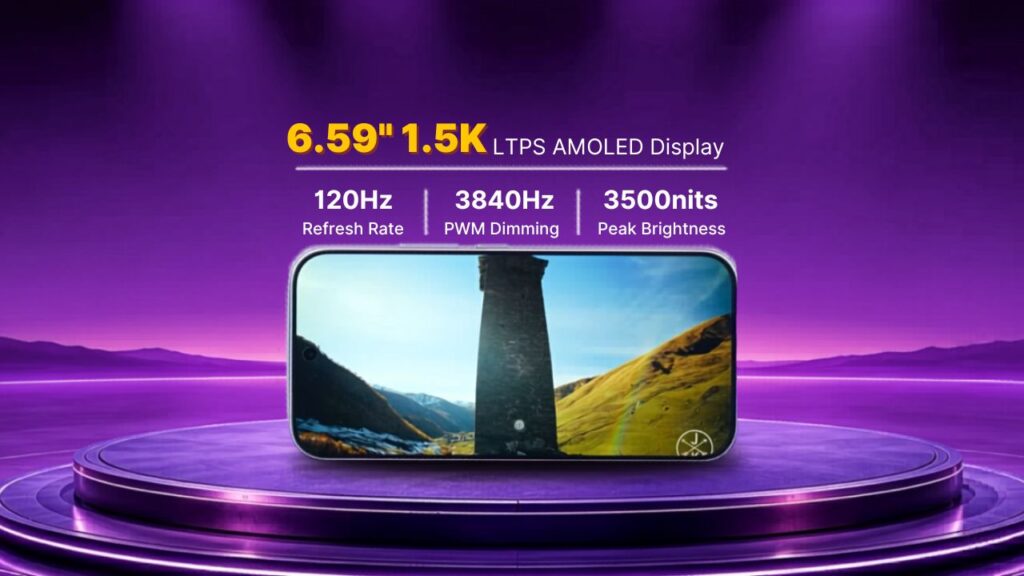
Key Display Attributes
- Refresh Rate: 120Hz dynamic refresh rate for fluid scrolling and UI transitions.
- Bezel Profile: Extremely symmetrical, razor-thin bezels yielding an excellent screen-to-body ratio.
- Color Depth: A true 12-bit panel capable of rendering over 68 billion colors. This results in incredibly smooth gradients, completely eliminating color banding in dark scenes.
Content Consumption
With Widevine L1 certification paired with native Dolby Vision and HDR10+ support, streaming platforms like Netflix, Prime Video, and YouTube offer an elite viewing experience. The high dynamic range populates deep blacks and bright highlights simultaneously without clipping.
Audio is delivered via hybrid stereo speakers. While the sound stage is balanced, the reliance on the earpiece rather than a dedicated top-firing speaker means the audio lacks the deep low-end bass found in wider flagship devices, though it remains clean at high volumes.
Xiaomi 17T Performance MediaTek Dimensity 8500 Ultra
Powering the Xiaomi 17T is the MediaTek Dimensity 8500 Ultra chipset, fabricated on a highly efficient process node. This is paired with high-speed LPDDR5X RAM and UFS 4.1 storage, ensuring rapid read/write speeds.
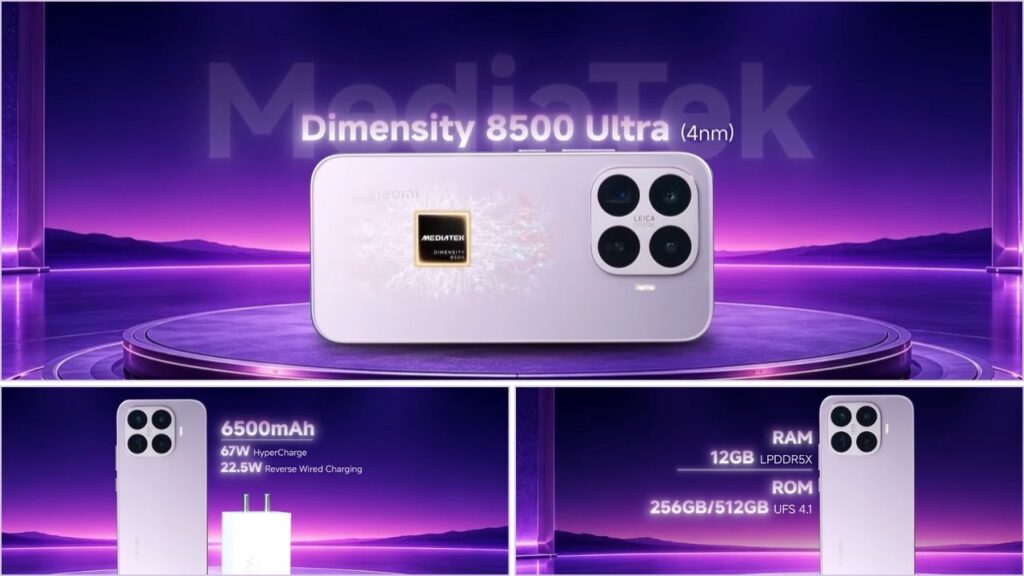
Synthetic Benchmarks and Gaming
While pre-production software restricts some benchmarking applications, the Dimensity 8500 Ultra targets an AnTuTu score of approximately 2.2 Million, placing it firmly within flagship territory.
In heavy titles like Genshin Impact, the phone maintains a stable 51–52 FPS over extended sessions. For competitive shooters like BGMI and Call of Duty: Mobile, the device caps out at a stable 90 FPS. Optimization for 120 FPS gaming is currently absent but could arrive via future OTA patches.
Cooling and Throttling
To counteract heat build-up within its plastic chassis, Xiaomi implemented its proprietary 3D Ice Loop cooling system.
During a sustained CPU Throttling test, the chipset maintained 73% of its maximum performance, proving that the thermal management system successfully prevents aggressive performance dips. The plastic back does not conduct heat as sharply as metal, keeping the device comfortable to hold during long gaming marathons.
Software: HyperOS 3.0 and Deep Gemini Integration
The Xiaomi 17T ships with HyperOS 3.0. Visually clean but feature-dense, the global variant is slated for 5 years of major software updates, though regional timelines for India remain subject to confirmation.
Key Software Features
- Hyper Island: A dynamic notification pill surrounding the selfie camera that expands to show background tasks like timers, music playback, or charging status.
- Hyper Connect: Allows ecosystem cross-connectivity, enabling users to seamlessly mirror screens, share clipboards, and transfer files between the phone, Xiaomi tablets, and compatible PCs.
- Google Gemini Integration: Deeply baked into the OS. Out-of-the-box support for Gemini Live allows for conversational AI interactions, alongside native AI image generation and contextual screen scanning.
Note on Bloatware: The device does come pre-loaded with third-party applications and the "Glance" lock-screen wallpaper carousel. Fortunately, these can be completely uninstalled or disabled during the initial setup to ensure a clean user interface.
Xiaomi 17T Performance Leica Partnership Evolves
Historically, the Xiaomi ‘T’ prefix prioritized raw processing power over camera optics. The 17T rewrites this playbook by introducing a triple-camera matrix co-engineered with Leica.
| Camera | Specification |
|---|---|
| Primary Camera | 50MP Main Sensor with OIS |
| Telephoto Camera | 50MP Telephoto Lens with 5X Optical Zoom |
| Macro Capability | Telephoto Macro Photography Support |
| Ultra-Wide Camera | 12MP Ultra-Wide Lens with Autofocus |
| Front Camera | 32MP Selfie Camera |
| Portrait Support | Leica Portrait Modes (23mm–115mm) |
| Video Recording | Up to 4K 60FPS |
| Special Features | Leica Filters, Fast Autofocus, Log Video |
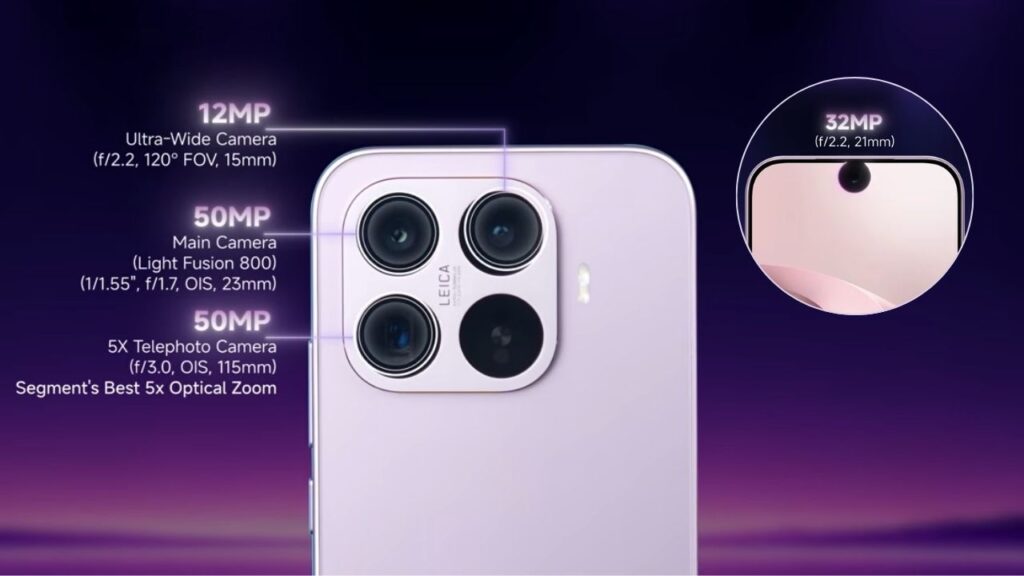
Rear Camera Analysis
The primary 50MP sensor delivers exceptional dynamic range. Users can toggle between two distinct Leica photographic styles:
- Leica Authentic: Preserves natural color tones, avoids aggressive shadow lifting, and mimics traditional film cameras.
- Leica Vibrant: Boosts saturation and contrast, producing punchy, social-media-ready images instantly.
The 50MP Telephoto sensor features a 5X optical zoom lens. It doubles as a Telemacro lens, allowing users to capture extreme close-ups with natural background bokeh from a comfortable distance. Portrait shooting ranges from 23mm up to 115mm, with the sweet spot for facial geometry falling between 80mm and 85mm. Edge detection is generally accurate, though minor artifacts can occur in low-light environments around complex hair structures.
The 12MP Ultra-Wide lens includes autofocus, allowing it to maintain sharp details across the frame, though it exhibits a slight drop in low-light performance compared to the primary shooter.
Video Capabilities
The video subsystem is remarkably robust, providing high-resolution recording across all lenses:
- Primary & Telephoto: Up to $4\text{K}$ at $60\text{FPS}$.
- Ultra-Wide & Selfie: Up to $4\text{K}$ at $30\text{FPS}$.
- Professional Tools: Support for shooting in Log video profile is included, allowing videographers to color-grade footage in post-production.
- Performance: Autofocus tracking and shutter response speeds are incredibly fast, reducing motion blur when capturing fast-moving subjects.
Xiaomi 17T Battery Life and Charging
Fitting a massive battery into a tight form factor is an engineering feat. Xiaomi has managed to pack a 6500mAh silicon-carbon battery into the 17T’s sleek frame.
- Wireless Charging: Not supported natively on this device.
- Reverse Wired Charging: Supports up to 22.5W reverse wired charging, effectively turning the smartphone into a power bank to top up secondary devices like wireless earbuds or secondary phones.
Connectivity and Hardware Essentials
The Xiaomi 17T covers a comprehensive suite of hardware sensors and connectivity standards:
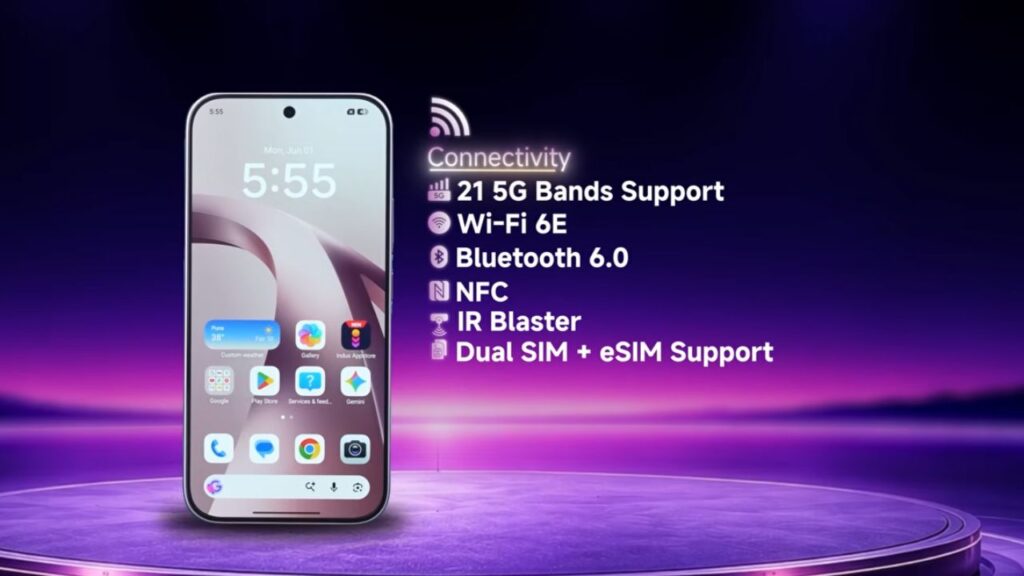
- Biometrics: Features an under-display optical fingerprint sensor. Due to the phone’s smaller vertical footprint, the lower positioning of the sensor remains easily reachable. Face unlock acts as a fast secondary biometric option.
- Network Capabilities: Supports 21 5G bands, guaranteeing universal compatibility with Indian and international networks. Dual Nano-SIM slots are present alongside eSIM support.
- Wireless Standards: Equipped with Wi-Fi 6E and Bluetooth 6.0 for low-latency wireless audio and high-bandwidth internet connectivity.
- Haptics: Controlled by an average-grade X-axis linear motor; it offers clean, precise vibrations but lacks the sharp crispness of tier-one flagship hardware.
- Safety & Compliance: SAR values are well within regulatory limits. The body features full IP68 dust and water resistance, protecting the phone against accidental submersions.
Verdict: Should You Buy the Xiaomi 17T?
The Xiaomi 17T marks an important return for Xiaomi’s T-series in India. With Leica-tuned cameras, a beautiful AMOLED display, powerful hardware, large battery, and modern software features, the smartphone delivers a compelling overall package.
While competition remains intense in the premium smartphone segment, Xiaomi has positioned the 17T as a serious contender by combining performance, photography, and multimedia strengths into one device.
For buyers looking for a premium Android phone without stepping into ultra-flagship pricing territory, the Xiaomi 17T could easily become one of the most attractive options available in 2026.
Read More : Motorola Edge 70 Pro+ vs vivo V70 Comparison – One Phone Changed Everything!