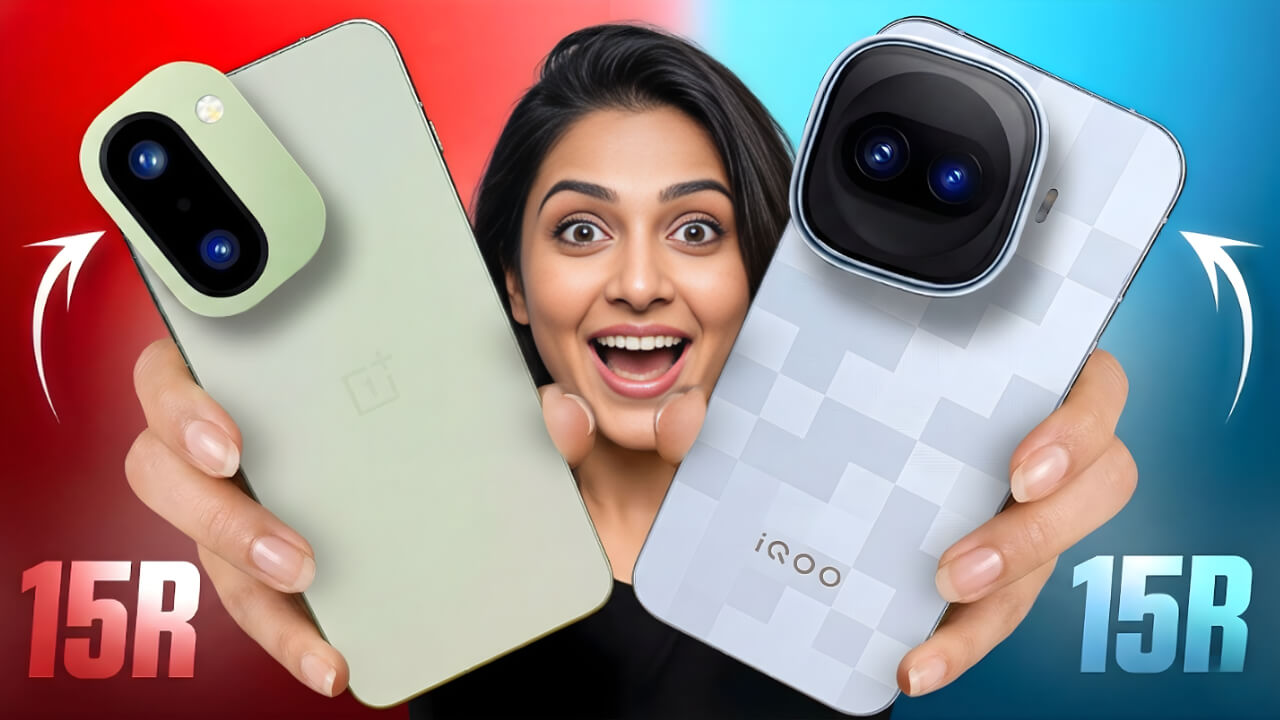
iQOO 15R vs OnePlus 15R : The sub-₹50,000 smartphone segment in 2026 has become a battlefield where “flagship killers” are no longer just affordable alternatives they are powerhouses in their own right. The latest contenders, the iQOO 15R and the OnePlus 15R, present a classic dilemma. On paper, they look like twins separated at birth, sharing the formidable Snapdragon 8 Gen 5 chipset, LPDDR5X RAM, and UFS 4.1 storage.
However, as any seasoned tech enthusiast knows, the devil is in the details specifically in the tuning, the software philosophy, and the camera processing. After putting both devices through their paces, here is a breakdown of which phone truly deserves your hard-earned money.
Contents
- 1 Performance: Raw Power vs. Sustained Stability
- 2 Camera: Precision vs. Natural Tones
- 3 Design: Playful Innovation vs. Industrial Elegance
- 4 Display: Speed vs. Immersion
- 5 Battery: The Powerhouse Era
- 6 Software: The User Experience
- 7 iQOO 15R vs OnePlus 15R Detailed Comparison
- 8 Conclusion: Which One Should You Buy?
Performance: Raw Power vs. Sustained Stability
While both phones use the same silicon, their behavior under stress is remarkably different. In benchmark tests, the OnePlus 15R tends to push the limits, achieving slightly higher Geekbench scores but allowing the device temperature to rise.
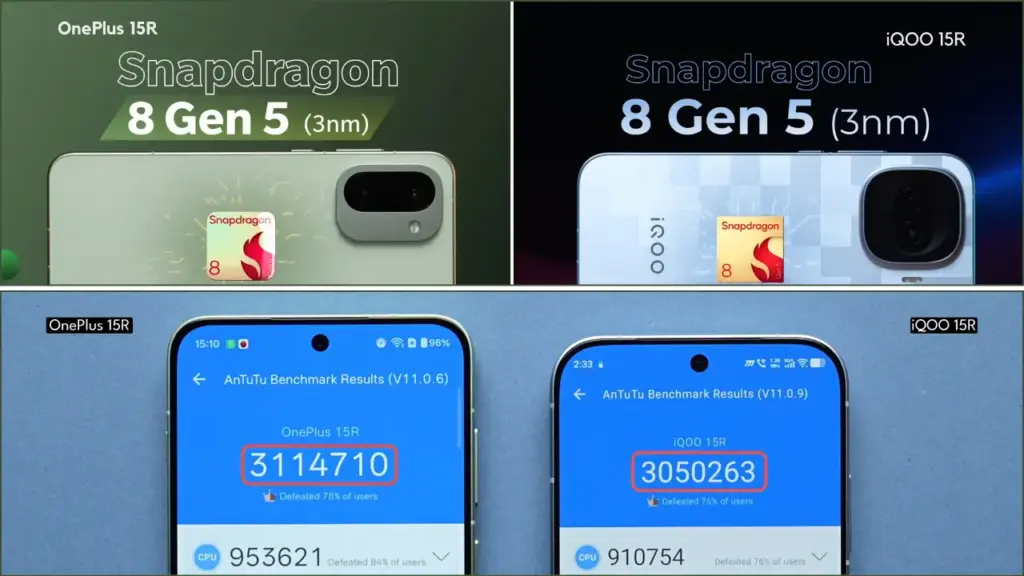
The iQOO 15R, however, is the clear winner for gamers. Its dedicated Q3 supercomputing chip allows for features like “Game Frame Interpolation,” pushing native 60fps games up to a staggering 144fps. It also features “Game Super Resolution,” which upscales titles like Genshin Impact to 1.5K. Most importantly, iQOO manages this while keeping the device remarkably cool, prioritizing thermal management over raw, unthrottled benchmarks.
Camera: Precision vs. Natural Tones
The camera battle is a game of two halves. The iQOO 15R uses the Sony LYT-700V sensor, which produces punchy, sharp images that are instantly ready for social media. It also takes the lead in selfie video, offering 4K at 60fps a rarity in this segment.
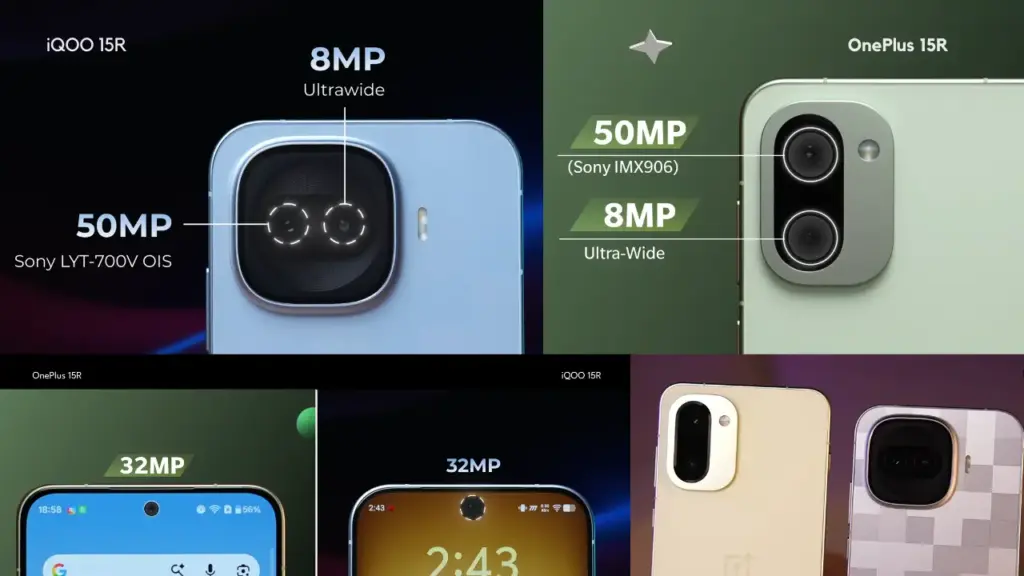
The OnePlus 15R, utilizing the Sony IMX-906, focuses on color accuracy and skin tones. Its portraits feel more professional with better edge detection and natural background blur. In video, OnePlus remains the king of stability and dynamic range, supporting 4K at 120fps on the rear camera. If you are a mobile videographer or prefer realistic photography, OnePlus has the edge.
Design: Playful Innovation vs. Industrial Elegance
Design is subjective, but the builds tell different stories. The iQOO 15R is designed for the younger, “gamer” aesthetic, featuring a unique checkerboard pattern and a compact, lightweight body that is easier to use with one hand.
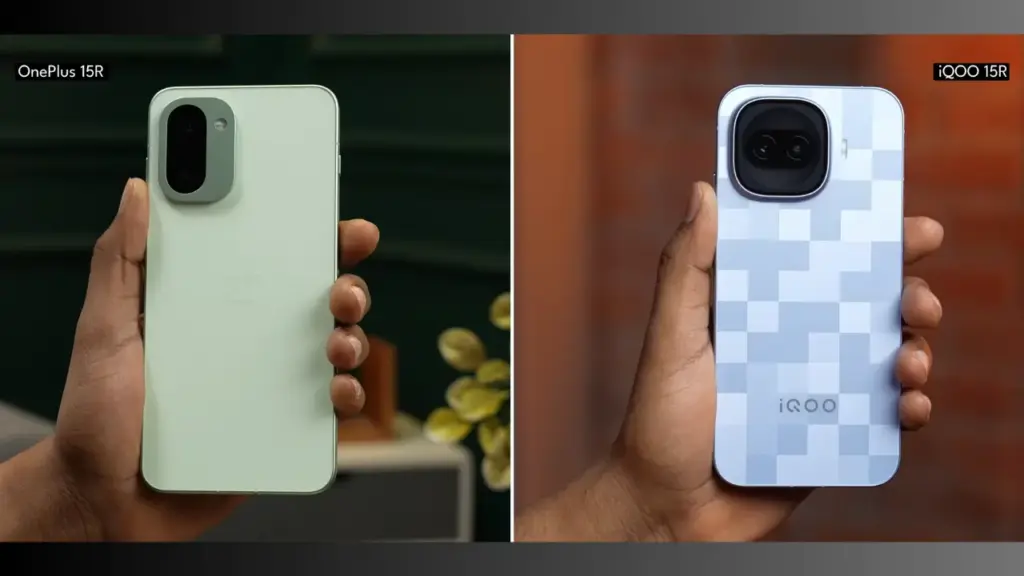
The OnePlus 15R stays true to its premium roots with a larger footprint and a cleaner, more minimalist look. A notable addition is the Plus Key, a customizable hardware button that adds functional value. Furthermore, the OnePlus offers a slightly superior durability rating (IP69K), providing better protection against high-pressure water jets.
Display: Speed vs. Immersion
OnePlus offers a massive 6.83-inch panel with a 165Hz refresh rate, making it a dream for media consumption and browsing. The speakers on the OnePlus also provide a wider soundstage and richer bass.
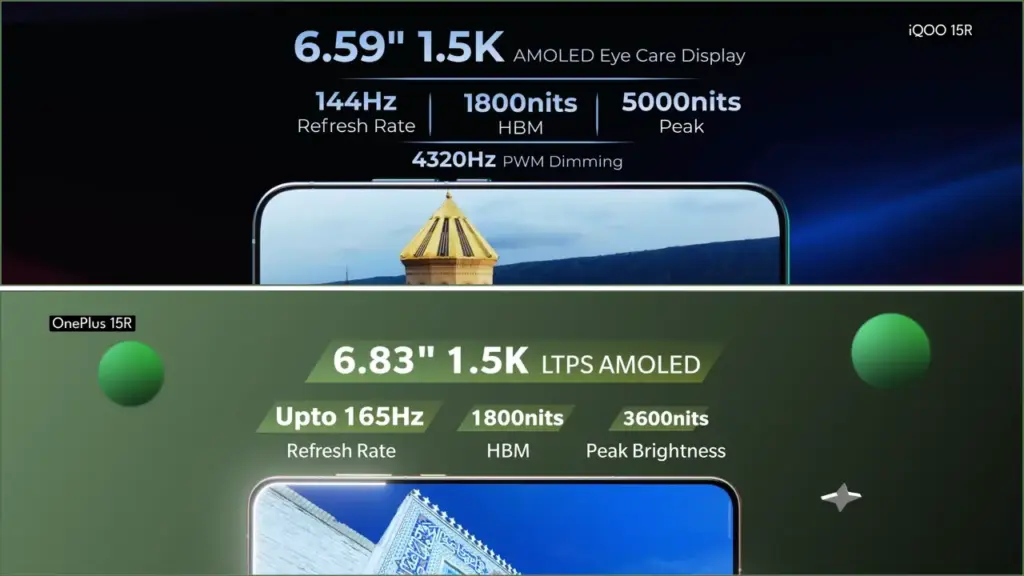
The iQOO 15R countered with a 6.59-inch 144Hz screen. While smaller, it offers better HDR peak highlights in apps like Netflix. It also features an ultrasonic fingerprint sensor, which is noticeably faster and more reliable than the optical sensors found on many competitors.
Battery: The Powerhouse Era
Both brands have embraced silicon-carbon battery technology, resulting in massive capacities.
- iQOO 15R: 7,600 mAh battery with 100W charging (0-100% in ~45 mins).
- OnePlus 15R: 7,400 mAh battery with 80W charging (0-100% in ~55 mins).
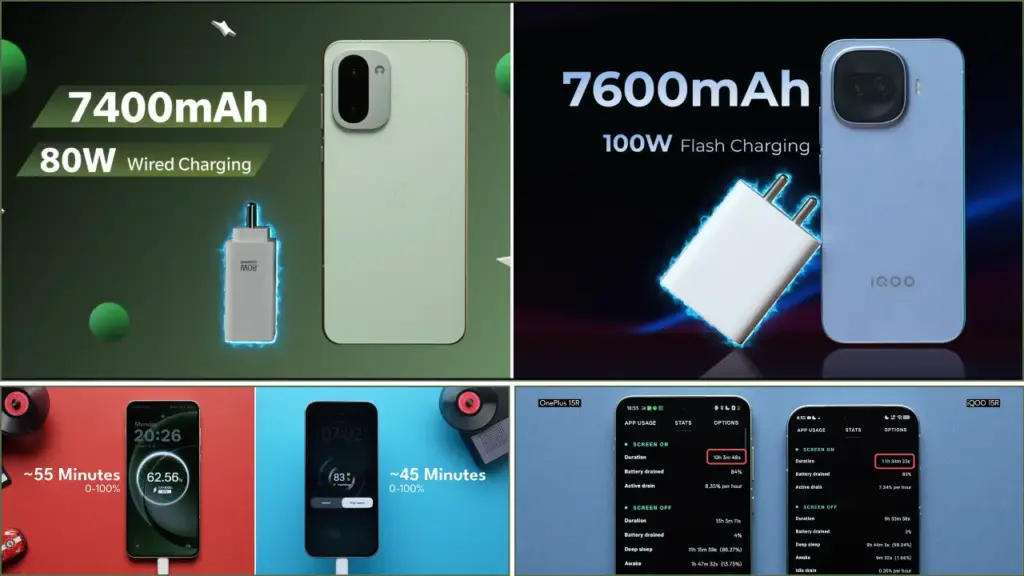
iQOO wins the endurance and speed race here. Despite the smaller body, it packs more juice and charges faster, making it nearly impossible to kill in a single day of heavy use.
Software: The User Experience
The Oxygen OS 16 on OnePlus remains the gold standard for many. It is clean, fluid, and integrated into the “Plus Mind” AI ecosystem, which feels more intuitive for global users.
Origin OS 6 on the iQOO is a massive leap forward from previous iterations, offering deep customization and smooth animations. However, it still carries a bit more pre-installed software than OnePlus, which might irritate purists who prefer a “stock-plus” feel.
iQOO 15R vs OnePlus 15R Detailed Comparison
| Feature | iQOO 15R | OnePlus 15R |
| Processor | Snapdragon 8 Gen 5 | Snapdragon 8 Gen 5 |
| Display | 6.59″ 1.5K OLED (144Hz) | 6.83″ 1.5K AMOLED (165Hz) |
| RAM/Storage | Up to 16GB / 512GB | Up to 16GB / 512GB |
| Rear Camera | 50MP (LYT-700V) + 8MP UW | 50MP (IMX-906) + 8MP UW |
| Front Camera | 32MP (4K 60fps support) | 32MP (4K 30fps support) |
| Battery | 7,600 mAh | 7,400 mAh |
| Charging | 100W Wired | 80W Wired |
| IP Rating | IP68 / IP69 | IP66 / IP68 / IP69 / IP69K |
| Software | Origin OS 6 (Android 16) | Oxygen OS 16 (Android 16) |
| Weight | Lighter / More Compact | Slightly Heavier / Larger |
Conclusion: Which One Should You Buy?
The choice between these two giants comes down to your lifestyle:
- Choose the iQOO 15R if: You are a hardcore gamer, you want the best battery life in the segment, and you prefer a compact, fast-charging device. At roughly ₹2,000 cheaper than its rival, it offers incredible value for performance seekers.
- Choose the OnePlus 15R if: You prioritize camera accuracy, video quality, a larger screen for movies, and a cleaner software experience. It is the more “balanced” flagship that excels as a daily driver.
Both phones are exceptional, and for the first time in years, there is no wrong answer only the “right” fit for your pocket.
Read More : Samsung Galaxy S26 Ultra Review – What’s Improved From Galaxy S25 Ultra?