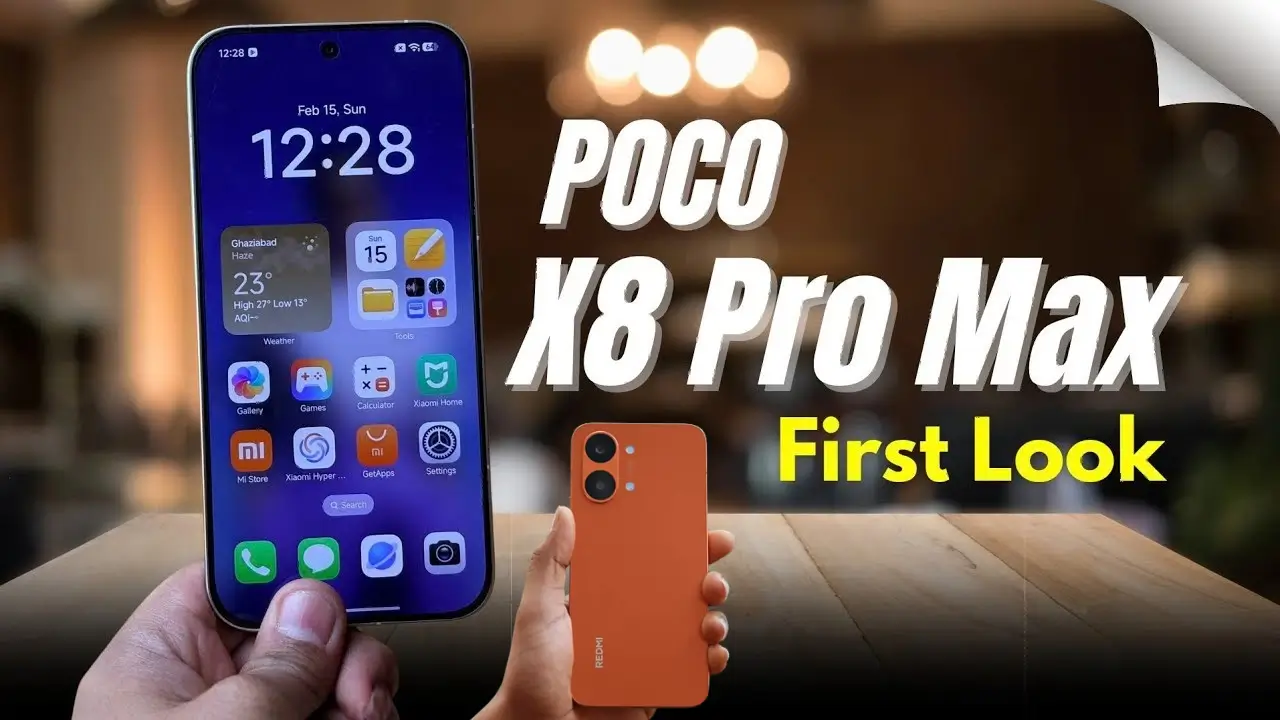
Poco X8 Pro Series Launch : As an experienced tech editor who has been tracking the evolution of “flagship killers,” the buzz surrounding the upcoming Poco X8 Pro Series feels different this time. We aren’t just talking about a minor incremental update; we are looking at a potential shift in how we define “battery life” and “raw power” in the mid-premium segment.
Confirmed for a March 17, 2026 launch, the Poco X8 Pro and its rumored sibling, the Pro Max, are aiming to disrupt the market. Here is a deep dive into what we know, what we expect, and why this launch is a significant milestone for the industry.
Contents
- 1 Poco X8 Pro 9000mAh Battery
- 2 Performance: The 3nm Architecture Advantage
- 3 Visuals and Multimedia: A Feast for the Eyes
- 4 The Software Layer: HyperOS 3
- 5 Camera Philosophy: Practical Excellence
- 6 Competitive Landscape: The “Flagship Killer” Reborn
- 7 Poco X8 Pro Series Technical Specifications
- 8 The Road to March 17
Poco X8 Pro 9000mAh Battery
Let’s address the elephant in the room: the battery capacity. Rumors that have circulated through tech circles in the last month pointed toward a massive battery, and the official teasers have all but confirmed it. The Poco X8 Pro Max is expected to feature a 9,000mAh battery. In an era where 5,000mAh has been the industry standard for three years, this is a significant leap.
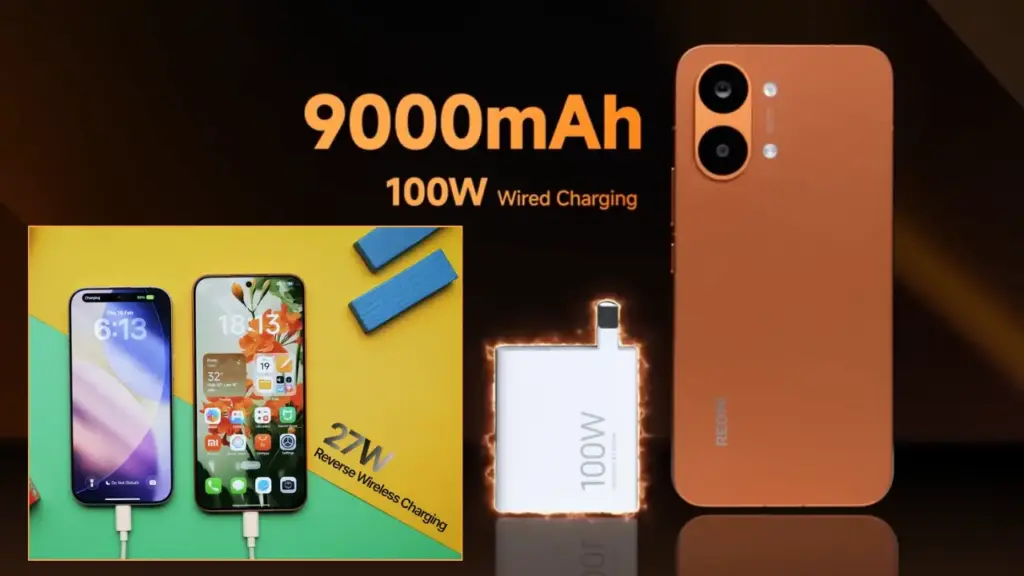
However, a larger battery in a phone often brings two immediate concerns: charging speed and device weight. Poco seems to have tackled this with its new proprietary energy density technology. By utilizing a silicon-carbon anode structure a technology that has matured significantly by early 2026 the company has managed to pack nearly double the capacity without doubling the phone’s thickness.
For the power user, this represents a fundamental change in behavior. This is not just a phone that lasts two days; it is a device designed to handle heavy 4K video rendering, high-frame-rate gaming, and AI-driven background tasks without the looming dread of the low-battery notification. This shift is likely to force competitors like Samsung and OnePlus to rethink their own battery strategies in the mid-range flagship segment.
Performance: The 3nm Architecture Advantage
While the battery will capture the headlines, the heart of the X8 Pro series lies in its silicon. We are moving away from the era of brute-forcing performance and into an era of intelligent efficiency. The Poco X8 Pro is rumored to debut with the MediaTek Dimensity 8500 Ultra, a chipset that leverages a sophisticated 3nm node architecture.
What does this mean for the average user? It means that the bottleneck is no longer the CPU, but thermal dissipation. This is where the Pro series introduces its second major innovation: a multi-layered vapor chamber cooling system that mimics the heat management seen in dedicated gaming laptops.
By shifting the heat away from the processor more effectively, the phone maintains sustained peak performance. During our preliminary look at the leaked architecture, it became clear that the goal isn’t just to reach 144 FPS in games; it is to maintain those frame rates for hours without the device throttling or becoming uncomfortable to hold.
Visuals and Multimedia: A Feast for the Eyes
A smartphone with this level of performance requires a display that can keep up. The Poco X8 Pro series adopts a 1.5K resolution OLED panel. While some might argue for 2K, the 1.5K choice is a calculated decision that balances visual clarity with power consumption a theme that seems consistent across the entire product development.
The peak brightness is expected to hit 3,500 nits, ensuring that the screen remains legible even under the harsh glare of direct summer sunlight. Furthermore, the inclusion of an LTPO 4.0 adaptive refresh rate ensures that the screen oscillates between 1Hz and 144Hz, saving battery life when viewing static content and providing fluid motion during fast-paced action.
The Software Layer: HyperOS 3
Hardware is only as good as the software that manages it. The X8 Pro series will ship with HyperOS 3, based on the latest version of Android. In our assessment, the critical factor here will be how the operating system handles the massive battery.
Poco has reportedly implemented an AI-driven power scheduler that learns user habits. If you rarely use your camera between 9 AM and 5 PM, the system will aggressively kill background processes related to the imaging stack to preserve juice for your evening gaming sessions. This level of granular control is what separates a standard Android phone from a true performance-oriented device.
Camera Philosophy: Practical Excellence
Often, performance-oriented phones stumble when it comes to the camera. The X8 Pro series, however, seems to have opted for a “balanced” approach. Instead of chasing astronomical megapixel counts, the focus has shifted to the sensor quality.
The primary 50MP Sony IMX-882 sensor is a workhorse, known for its dynamic range and noise reduction capabilities. Coupled with OIS (Optical Image Stabilization), the hardware is capable. However, the real test will be the image processing algorithms. Given the NPU (Neural Processing Unit) capabilities of the new Dimensity chips, we expect to see significant improvements in real-time HDR processing and low-light photography.
Competitive Landscape: The “Flagship Killer” Reborn
The timing of the March 17 launch is strategic. It places the device squarely in the crosshairs of the early-year flagship refresh cycles. For the Indian market, where the X8 Pro series will be a major release, this creates a fascinating dilemma for consumers.
Are users willing to trade a slightly more refined camera system (often found in more expensive flagships) for the sheer utility of a 9,000mAh battery and sustained performance?
Historically, the answer has been a resounding “yes.” If Poco prices this series aggressively keeping it within the ₹35,000 to ₹55,000 range it could effectively dismantle the premium aspirations of many competing devices that offer similar performance at a much higher price point. It forces the question: What do we actually value in a smartphone in 2026? For many, it is no longer about status; it is about functionality, uptime, and the ability to do more with the device without being chained to a charger.
Poco X8 Pro Series Technical Specifications
The following table provides a comprehensive breakdown of the expected technical specifications based on the latest industry reports and leaks.
| Feature | Poco X8 Pro | Poco X8 Pro Max |
| Processor | MediaTek Dimensity 8500 Ultra | MediaTek Dimensity 9500s |
| Battery Capacity | 7,560mAh | 9,000mAh |
| Charging | 100W Wired Fast Charging | 100W Wired Fast Charging |
| Display | 1.5K OLED, 120Hz | 1.5K OLED, 144Hz |
| Peak Brightness | 3,500 nits | 3,500 nits |
| Rear Camera | 50MP (OIS) + 8MP Ultra-Wide | 50MP (Light Fusion 600) + 8MP Wide |
| Front Camera | 20MP | 20MP |
| Operating System | HyperOS 3 (Android 16) | HyperOS 3 (Android 16) |
| Durability | IP68 Rating, Gorilla Glass 7i | IP69 Rating, Gorilla Glass 7i |
| Build Material | Composite Glass/Metal Frame | Premium Glass/Metal Frame |
The Road to March 17
As we approach the launch date, the industry is watching closely. This isn’t just about another phone hitting the shelves; it’s a test of whether the market still has an appetite for specialized, high-performance hardware.
The Poco X8 Pro series doesn’t try to be everything for everyone. It doesn’t claim to have the best camera in the world or the most luxurious materials. Instead, it leans into the identity that Poco forged years ago: being a machine for the user who demands more from their silicon.
Read More : Motorola Edge 70 Fusion vs vivo T4 Pro Full Comparison – The SMARTER Choice?